Accounting firm software updates are easy to treat as routine maintenance. A patch gets scheduled. An application version changes. A workstation restarts. A browser update affects an add-in. A line-of-business platform behaves differently after an overnight change. On paper, these are ordinary IT events. In accounting environments, they often are not. When daily work depends … Read more
Law firm IT documentation is easy to treat as a background task. Passwords are stored somewhere. Vendor information exists in someone’s inbox. A few notes live in tickets, spreadsheets, or scattered files. People know who to call when something breaks. For a while, that can seem workable. The problem is that legal environments often become … Read more
Co-managed IT services are often most useful in organizations that are not looking to hand off IT entirely. They already have internal capability. They may have an IT manager, a systems administrator, or a small internal team that knows the business well and handles day-to-day needs responsibly. The problem is not that no one is … Read more
Managed IT services cost is often one of the first things businesses want to understand, and one of the easiest things to misunderstand. Many organizations begin by looking for a number. They want to know what support should cost per user, per device, or per month. That is understandable. Pricing matters. Budget discipline matters. No … Read more
Managed IT services provider is a phrase many organizations encounter only after technology has already become harder to manage than expected. At that point, the search often begins with familiar questions. Who can support the environment reliably? Who can respond when issues arise? Who can take responsibility for day-to-day IT without creating more confusion, more … Read more
By the time technology becomes a visible problem, the decision that caused it is usually long past. Reactive IT rarely announces itself as such. Systems continue to function. Tickets get resolved. Projects move forward. From the outside, the environment appears stable enough. What’s less visible is the accumulation of small inefficiencies, duplicated effort, and unexamined … Read more
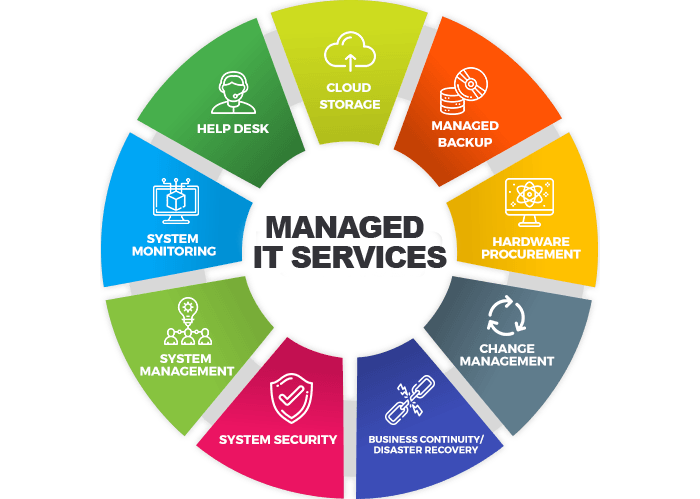
Managed IT services don’t usually fail in dramatic ways. They fail quietly—through disconnected decisions, unmanaged risk, and technology that drifts without accountability. This article explores why support alone isn’t enough, and how advisory oversight changes the outcome.