
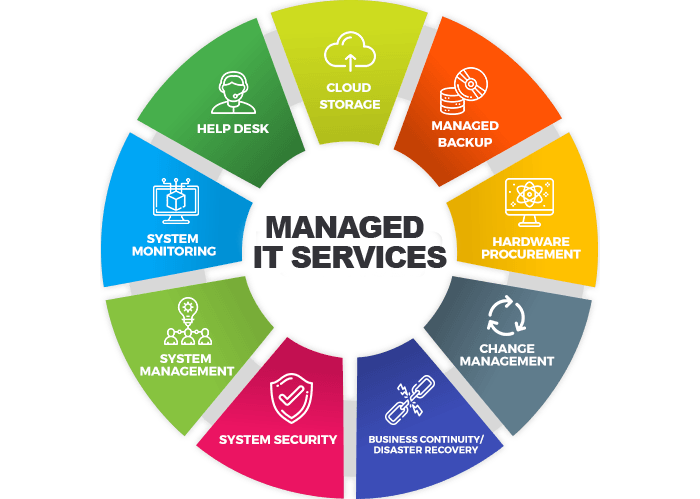
Most organizations adopt managed IT services with reasonable expectations: fewer disruptions, more predictability, and less day-to-day friction around technology. On the surface, this model works. Systems stay online, tickets get resolved, and vendors appear responsive.
Yet over time, many organizations begin to sense something is off. Issues repeat themselves. Decisions feel reactive. Technology investments don’t seem to compound in value. Despite “having managed IT,” the environment feels increasingly fragile or misaligned.
The problem is rarely effort or competence.
More often, it’s the absence of IT advisory services and oversight.
What Managed IT Services Are Designed to Do
Managed IT services are operational by design. They focus on execution: maintaining systems, responding to incidents, applying updates, and keeping the lights on. When measured against those goals, many providers perform adequately.
Where the model struggles is outside the boundaries of day-to-day operations. Managed services answer the question “Is this working right now?” very well. They are far less effective at answering “Does this still make sense?”
That distinction matters more than most organizations realize.
The Hidden Limitation of Purely Operational IT
In environments without advisory oversight, technology decisions tend to accumulate rather than evolve. Tools are added to solve immediate problems. Infrastructure is expanded to accommodate short-term needs. Security controls grow unevenly as new risks emerge.
None of this feels dramatic in the moment. Each decision is usually defensible on its own. But without someone accountable for context and continuity, those decisions rarely get revisited. Over time, the environment becomes harder to manage, harder to secure, and harder to change.
At that point, managed IT begins to feel reactive—not because support is poor, but because direction is missing.
Advisory Oversight Changes the Nature of IT
vCIO Advisory oversight introduces a different layer of responsibility. It is not about doing more work; it is about owning the thinking behind the work.
Instead of focusing solely on incidents and tasks, advisory oversight looks at patterns. It asks whether systems align with operational priorities, whether risk exposure is understood and intentional, and whether today’s solutions will still be appropriate tomorrow.
This shift doesn’t replace managed services. It gives them structure. Managed IT handles execution. Advisory oversight ensures that execution serves a coherent direction.
Common Failure Patterns We See
Organizations without advisory oversight often experience a familiar pattern. On the surface, everything appears functional, but beneath that stability are small, compounding misalignments that rarely get addressed directly.
Common examples include:
- Repeated infrastructure upgrades with unclear long-term benefit
- Security tools layered over time without governance or cohesion
- Backup systems that exist but haven’t been meaningfully validated
- Vendor decisions driven by convenience rather than organizational fit
- “Temporary” solutions that quietly become permanent
Individually, none of these represent a dramatic failure. Most are reasonable responses to immediate needs.
Taken together, however, they signal an environment that functions without technology governance.
When no one is explicitly responsible for asking long-range questions—about relevance, risk, and direction – technology decisions naturally drift toward convenience rather than fit. Over time, that drift erodes confidence, increases exposure, and makes change more difficult than it needs to be.
Advisory-Led Managed IT Is a Different Model
When advisory oversight is present, technology decisions become deliberate. Priorities are documented and revisited. Tradeoffs are discussed explicitly rather than absorbed quietly. Risk is managed as a decision, not a surprise.
Most importantly, services are allowed to evolve alongside the organization. What made sense two years ago is reassessed. What was once sufficient is either reinforced or replaced with intention.
The goal isn’t perfection. It’s coherence.
Choosing the Right Engagement Model
Many organizations ask whether they need managed IT services. Far fewer ask who is responsible for ensuring that their IT decisions still make sense over time.
That question matters more than it appears. Execution keeps systems running. Oversight keeps them relevant.
Managed IT services work best when they operate within a framework of understanding – one that accounts for context, risk, and long-term direction. Advisory oversight provides that framework quietly and consistently.
For organizations that rely on technology to operate, that difference is not cosmetic.
It’s structural.