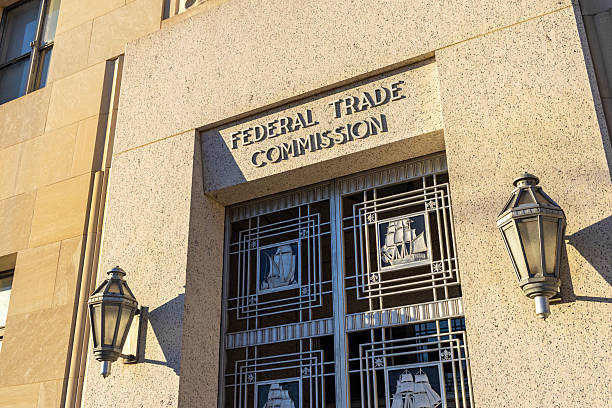
The FTC Safeguards Rule applies to more businesses than most expect – and compliance requires more than most have documented. FTC Safeguards Rule compliance is an active federal obligation for any organization that qualifies as a financial institution under the Gramm-Leach-Bliley Act – a category that is considerably broader than it sounds. The rule is … Read more
The 2024 SEC Regulation S-P amendments changed what registered investment advisers are required to maintain. SEC Regulation S-P investment adviser cybersecurity obligations changed significantly with the amendments that took effect in 2024. For registered investment advisers, SEC Regulation S-P compliance requirements 2024 now include a written incident response program, a defined capability to notify affected … Read more
In regulated environments, access is never just about convenience. It determines who can influence systems, who can view sensitive information, who can make changes, and how confidently an organization can explain those boundaries later. That is why Controlled Access for Pharmaceutical & Biotech Companies should be treated as part of operational control, not as a … Read more
In financial environments, security issues do not always begin with an obvious breach or failed control. Often, they begin when permissions expand gradually, legacy access remains in place, and role-based boundaries stop matching how the work is actually assigned. That is why Financial Services Access Control should be treated as more than a technical configuration. … Read more
In many law firms, access problems do not begin with a major security event. They begin when permissions expand gradually, shared access habits become normal, and matter-related boundaries stop reflecting how work is actually assigned. That is why Law Firm Access Control should be treated as more than a technical setting inside the environment. It … Read more
Healthcare documentation workflows often depend on more than internal systems and employees. Sensitive data may move through document-generation platforms, output systems, secure exchange pipelines, storage environments, and downstream print or digital distribution processes that involve outside providers as well as internal teams. In that setting, vendor access security for healthcare documentation workflows becomes more than … Read more
Law firm remote access becomes more complicated the moment convenience starts carrying more weight than control. At first, the need seems straightforward. Attorneys need to reach matter files from outside the office. Staff need to work from home, in court, while traveling, or between locations. Email, document systems, practice platforms, and shared resources all need … Read more